
Engine Gaskets & O-Rings: The Complete Guide for Engine Rebuilders and
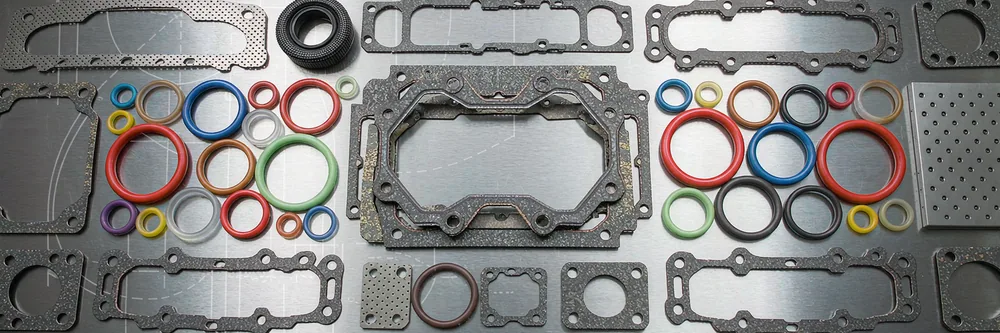
Engine gaskets are a small-cost, high-consequence category. A head gasket typically accounts for less than 3% of the parts cost of an overhaul, yet one wrong or low-quality gasket can write off the entire rebuild. The stakes rise as fleets age: the average vehicle on U.S. roads is now 12.5 years old, industrial and marine engines run even longer between overhauls, and the global head gasket market reached roughly USD 2.3 billion in 2024 on the strength of that demand. This guide is written for professional buyers — engine rebuilders, aftermarket distributors, and fleet maintenance teams — who need engine gaskets and O-rings selected by material and ordered by OEM part number, not guessed from a catalog picture.
Quick Answer: Engine gaskets seal the joints between major components — cylinder head, manifolds, oil pan, timing cover — while O-rings seal fluid connections in fuel, coolant and oil systems. Modern engines overwhelmingly use multi-layer steel (MLS) head gaskets. Field repair data attributes roughly 50–65% of head gasket failures to overheating, 20–25% to detonation, and 10–15% to installation errors. Correct identification by OEM part number and material matching — MLS, composite or graphite for gaskets; NBR, FKM or EPDM for O-rings — prevents the majority of premature failures.
What Does an Engine Gasket Actually Do?
Two machined surfaces can never be made flat enough to seal on their own. A gasket is the engineered layer that fills the difference. In plain terms: imagine two flat boards pressed together with water between them — no matter how flat the boards look, tiny waves and scratches let the water through. A gasket is a thin, conformable sheet that fills those waves and holds the seal under heat and pressure.
The head gasket carries the hardest job in the engine. It must seal combustion pressures exceeding 1,000 psi in diesel applications, meter coolant and oil between block and head, and survive thousands of thermal cycles between an aluminum head and a cast-iron block that expand at different rates. Every other gasket on the engine is the same problem at lower stakes: manifold gaskets face exhaust heat and intake vacuum, valve cover and oil pan gaskets contain oil splash, and the timing cover gasket protects the front drive. O-rings take over wherever two rigid fittings meet — injector bodies, coolant pipe flanges, oil cooler unions, sensor bores.
Hanchi Auto Parts supplies engine gaskets and O-rings for major European, Japanese and industrial engine families, including Baudouin marine and generator applications.
What Are the Main Types of Engine Gaskets?
A rebuilder touches six gasket categories on virtually every overhaul. Knowing each one's failure mode tells you where quality matters most.
- Head gasket — seals combustion, coolant and oil between head and block. The highest-stress seal in the engine and the most common source of catastrophic failure.
- Intake and exhaust manifold gaskets — seal air and exhaust gas. Exhaust manifold gaskets see sustained temperatures above 400 °C and are typically multi-layer steel or graphite-faced.
- Valve cover gasket — contains oil splash at the top of the engine. Usually molded rubber or cork-rubber composite; failure shows as external oil seepage.
- Oil pan gasket — seals the sump. Increasingly replaced by liquid gasket (RTV) on modern engines, but molded rubber and metal-carrier designs remain common on industrial diesels.
- Timing cover gasket — protects the timing drive. Often overlooked during reassembly; a leak here contaminates the belt or chain.
- Water pump and thermostat housing gaskets — small, cheap, and responsible for a disproportionate share of coolant leaks when reused instead of replaced.
Full overhaul gasket sets bundle all of the above plus seals and O-rings matched to a specific engine serial range. Hanchi Auto Parts organizes complete sets by OEM part number, so you order by engine model rather than hunting individual gaskets.
MLS vs Composite vs Copper: Which Head Gasket Material Should You Choose?
Multi-layer steel is the correct default for any engine built after the mid-1990s. Composite and graphite remain appropriate for older, lower-compression engines where deck surface finish cannot be guaranteed. The three families differ in how they create and hold a seal:
| Property | MLS (Multi-Layer Steel) | Composite / Graphite | Copper |
|---|---|---|---|
| Construction | 2–6 embossed stainless layers, elastomer coating | Graphite or aramid fiber on a steel core | Solid copper shim |
| Sealing under high pressure | Excellent | Moderate | Excellent |
| Surface flatness needed | Very strict | Forgiving | Very strict |
| Thermal cycling resistance | Excellent | Moderate | Excellent |
| Typical cost per unit | USD 80–300 | USD 30–80 | USD 200–800 |
| Best fit | Modern diesel, turbo and gas engines | Pre-1990s engines, field repairs | Racing and extreme-boost builds |
Sources: Victor Reinz and Elring technical documentation; U.S. aftermarket retail pricing benchmarks, 2025.
MLS became the OEM standard because the embossed steel layers work like springs. The head lifts microscopically every time a cylinder fires, and each embossed layer pushes back to hold sealing load — the same principle as a stack of spring washers keeping tension on a bolt. The trade-off is unforgiving surface requirements. Gasket manufacturers' guidance is consistent on this point: poor deck surface preparation, not defective parts, is the leading cause of repeat MLS failures.
What Causes Head Gaskets to Fail?
Field repair data and published SAE technical literature converge on three causes, in order of frequency:
- Overheating — approximately 50–65% of failures. Sustained high coolant temperature expands the aluminum head beyond the gasket's ability to hold a seal, warping the head and breaching the fire ring. The triggers are cooling-system faults: a stuck thermostat, a failing water pump, or a slow coolant leak.
- Detonation and pre-ignition — approximately 20–25% of failures. Abnormal combustion sends repeated pressure spikes into the fire ring, eroding it cylinder by cylinder. Often underdiagnosed, because the engine may otherwise appear to run normally.
- Installation errors — approximately 10–15% of failures. Reused torque-to-yield bolts, an incorrect torque sequence, or an unresurfaced warped head guarantee premature failure regardless of gasket quality.
The practical takeaway: a head gasket almost never fails on its own. It is the last domino in a cooling-system or combustion fault, and replacing the gasket without fixing the root cause produces the recurring-failure cases that damage a shop's reputation.
How Do You Choose the Right O-Ring Material?
O-ring selection is a fluid-and-temperature compatibility decision, and the wrong elastomer is the most common cause of chronic seepage on fuel and coolant connections. Four materials cover roughly 95% of engine applications:
| Material | Temperature range | Resists | Avoid with |
|---|---|---|---|
| NBR (Nitrile) | −40 to +120 °C (−40 to +248 °F) | Engine oil, diesel fuel, grease | Ozone, brake fluid, high heat |
| FKM (Viton®) | −20 to +204 °C (−4 to +399 °F) | Fuel, oil, biodiesel, heat | Coolant (glycol), steam, ketones |
| EPDM | −50 to +150 °C (−58 to +302 °F) | Coolant, water, steam, brake fluid | All petroleum oils and fuels |
| Silicone (VMQ) | −60 to +200 °C (−76 to +392 °F) | Heat, ozone, dry air | Fuels, concentrated oils, abrasion |
The classic failure pattern: an NBR ring on a high-temperature fuel return line hardens within months, or an FKM ring on a coolant fitting swells and weeps. Match the elastomer to the fluid first and the temperature second, and most chronic leak comebacks disappear. Hanchi Auto Parts stocks O-rings in NBR, FKM and EPDM across common metric and imperial sizes, with material certificates available on distributor orders.
OEM vs Aftermarket Gaskets: What's the Real Difference?
"OEM" and "aftermarket" describe supply channels, not quality tiers. Quality is set by material specification and manufacturing control. Dealer gaskets carry brand packaging and a 2–4x price premium. Premium aftermarket manufacturers — Victor Reinz, Elring, Fel-Pro — frequently supply the OEM lines themselves and sell the same-spec part under their own brand. Value-tier parts vary widely: the best match OEM material specs at 40–60% of dealer cost, while the worst substitute inferior elastomers and skip coating steps.
For distributors, the decision framework comes down to three checks:
- Verify the material spec, not the label. An MLS gasket should state layer count, steel grade and coating type; an O-ring should state the elastomer compound.
- Ask for dimensional conformance data. Reputable manufacturers hold head gasket thickness within ±0.02 mm.
- Test before you scale. Run a pilot batch through your most demanding engine family before committing to volume.
Hanchi Auto Parts positions its sealing range in the value-premium tier: OEM-equivalent material specifications from audited Chinese factories, with dimensional inspection reports available on request. With more than 20 years in the auto parts industry, the selection model is built for distributors who need consistent spec compliance across repeat orders, not one-off bargain pricing.
How Do You Identify the Correct Gasket for an Engine?
The only reliable method is matching by OEM part number, then cross-checking the engine serial range — engine families routinely change gasket designs mid-production. The professional workflow:
- Pull the engine identification plate. On Baudouin marine and industrial engines it carries the model (6M26, 12M26, M33 series) and serial number.
- Find the OEM part number from the parts catalog, the old gasket, or the dealer system. A head gasket for a 6M26 and a 12M26 does not interchange despite the shared architecture.
- Cross-reference the supersession chain. OEMs supersede numbers as designs improve; ordering a superseded number can mean outdated stock.
- Confirm the serial-range break. Many engines have a "before/after serial number X" split for gaskets — a detail generic catalog listings often miss.
- Order the full set for overhauls. Mixing a new head gasket with reused ancillary gaskets and O-rings is false economy; the ancillaries cost little and cause most post-rebuild seepage complaints.
Common Baudouin M33-family gasket numbers, as an example of what the catalog resolves:
| Part | OEM number | Applies to |
|---|---|---|
| Cylinder head gasket | 330201000501 | 6M33 family (diesel and NG) |
| Cylinder head gasket | 331008000483 | 12M33 family |
| Intake manifold gasket | 331008000064 | M33 platform |
| Exhaust manifold gasket | 331009000095 | M33 platform |
Send Hanchi Auto Parts the OEM number and the catalog cross-references supersessions and serial-range splits for you — the most error-prone step in the process is the one you no longer have to do.
Get a quote in one message. Send three things: the OEM part number (or a photo of the old gasket or engine plate), the engine model, and the quantity. That is all we need to confirm the current number, serial-range fit and lead time, then quote. If the number is unreadable, the photo does the work instead.
Frequently Asked Questions
How long should a head gasket last in a diesel engine?
A correctly installed MLS head gasket on a healthy cooling system should last the service life of the engine — typically 10,000+ operating hours on industrial and marine diesels. Premature failures trace back to overheating, detonation or installation faults, not gasket age.
Can I reuse a head gasket or O-rings after teardown?
No. MLS gaskets are single-use — the embossed layers take a permanent set on first torquing. O-rings take compression set and lose sealing force after heat exposure; replace every O-ring disturbed during disassembly. The parts cost is trivial against a repeat teardown.
What is the difference between a gasket set and an overhaul kit?
A gasket set covers one job — a head set includes everything above the block. An overhaul or full engine kit includes every gasket, seal and O-ring for a complete rebuild. For engines with unknown service history, the full kit is the safer purchase.
How do I verify a Chinese supplier's gasket quality before a volume order?
Request three things: the material specification sheet (layer count and steel grade for MLS; elastomer compound for O-rings), a dimensional inspection report on a sample, and a small pilot batch to run through your own workshop. A supplier unwilling to provide spec sheets is telling you something.
Do you stock Baudouin gaskets, and how do I order by OEM number?
Yes — Hanchi Auto Parts covers Baudouin families including M26 and M33. Send the OEM number (a photo of the old gasket or engine plate also works) and we confirm the current superseded number, serial-range fit and lead time before quoting.
Are aftermarket gaskets legal under engine warranty?
Terms vary by manufacturer and region, but in most markets aftermarket parts do not void a warranty unless the part itself caused the failure. For out-of-warranty industrial and marine engines — the bulk of the rebuild market — OEM-equivalent aftermarket gaskets are the standard choice.
Compatible with OEM gaskets and O-rings across major diesel, gas, industrial and marine engine families, including Baudouin M26 and M33 series. Part numbers are listed for identification purposes. Hanchi Auto Parts is an independent supplier and is not affiliated with the engine manufacturers named. Verify numbers against your engine serial range before ordering.
Originally published by Hanchi Auto Parts — read the original.